Saturday, March 26, 2016

Post 2: MODERNISM


                                                          Modernism

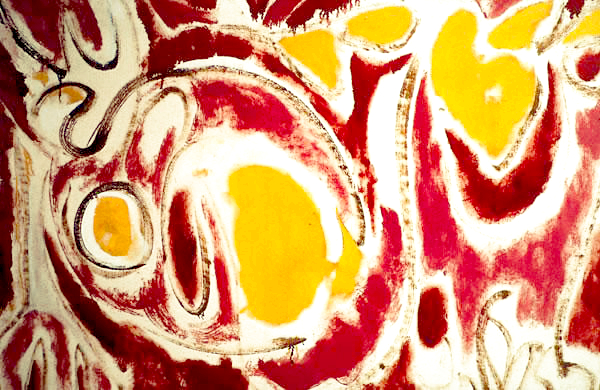
Modernism is the response to the social and cultural changes that was occurring during Europe of the 19th century with the greatest event of the industrial revolution, the introduction of the machine, wealth and mass production, women’s social position have changed drastically compared to the middle ages, at the dawn of the 20th century women gained more rights in terms of work and academia and no longer completely dependent or confined to maternity, the Guerrilla Girls state “But there was also more opportunity than ever before for a woman to live her life and make art on her own terms.”(59). This change affected every aspect of life, and naturally it transformed the art world and the artist, because prior to this, the artist was either confined to deal with a biblical subject if commissioned by the church or follow the rules and the taste of the patronage, which were mostly wealthy families interested in self-portraits, women artist were acknowledging the male gaze and that was the dominant theme of their work. With the introduction of art as a product, the cultural and social transformations, artists ventured to experiment with ideas outside the traditional boundaries and a new perception was emerging in relation between the artist and the work and in the process new forms of art were introduced during the 19th and 20th. Chadwick explains “During these same years, artists in England and France were also abandoning naturalism in favor of stylized abstractions.”(256), abstraction is a composition of colors, geometric designs and shapes in which the depiction or the art work is not necessarily recognizable but the infusion is rather intended to conveys a sense, or portray a political situation as Chadwick points out “its course, inextricably bound up with the formal developments of Post-Impressionism and Cubism, and with a desire to break with nature and infuse the resulting art with a profound spiritual content.”(252) during this period women artist given the better circumstances of the time were at the heart of abstraction both as creators and representatives of the new visual culture, traditional appearance and the woman dress became one of the central issues for debate in the feminists movements in particular and intellectuals in general. The redesign of the old dress into one that is more practical and flexible led to a new realm in fashion design, a marriage between art and craft. Some of the prominent figures of this movement were Margaretha von Brauchitsch, Wassily Kandinsky, Gabriele Munter, Roger Fry, Vanessa Bell and Sonia Delaunay. According to Chadwick Delaunay made her “first completely abstract” debut after the birth of her child in 1911, the work was named Couverture it was influenced by Russian peasant design and Cubism.  


                                                       Sonia Delaunay    
                                                       Couverture    1911


                                       Wassily Kandinsky
                                        First Abstract watercolor    1910


After world war 1 with the strong presence of industrialization and materialism the Dada movement assumed popularity in Paris, influenced by the prior movements like Expressionism and Cubism. Dada as explained by the Guerrilla Girls is " an art movement that challenged every convention (except male supremacy) and scandalized bourgeois society"(66) essentially the movement was a reaction and an attack on the nationalistic and materialistic tendencies of the middle class. Artists like Jean Arp and his wife, Sophie Taeber-Arp and Hannah Hoch were pioneers of the movement.

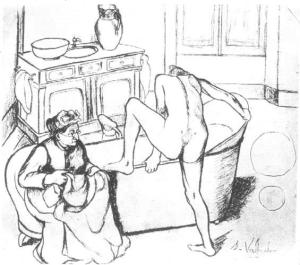
The relative advancement of women rights in terms of employment and education overshadowed the polemic subject of the female body, Chadwick points out "Marginalized in the aesthetic and political debates swirling around modern art movements in the early decades of the twentieth century, many woman turned to the female body as the primary subject of a woman's experience."(282) Suzanne Valadon was deeply interested and experimenting with the nude female body, her work is considered a critique to the pervasive concepts of women as controlled by emotions and biology, it was also an attack on the presentation of the female body as "lush surface isolated and controlled by the male gaze"(Chadwick 285) which distinguished her from contemporaries.

                                               
                                    Suzanne Valadon
                                    Grandmother and Young Girl Stepping into the Bath   1908                    
                               suzanne_valadon-14939B5B8C44436B1C5

Valadon's work was characterized by domesticity and community and the figures are wholly absorbed in their own action, also she emphasizes the natural gestures during physical execution.

From the Dada movement came Surrealism, which at the begging attracted many women artist, surrealism was similar to dadaism in that it rejected the middle-class condition and highly influenced by the works of Sigmund Freud on the unconscious,  Chadwick explains"During the 1930's women artist came to surrealism in large numbers, attracted by the movement's anti-academic stance and by its sanctioning of an art in which personal reality dominates"(310), nevertheless given the nature of the movement and the established role for women in it, they eventually withdrew from the new school.

                                      Kay Sage
                                      In The Third Sleep

                                      In the Third Sleep

                                                   Tarsila Do Amaral
                                                   Anthropophagy     1929
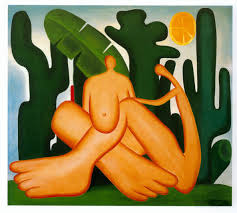
                                     

Modernism transformed the structure, colors and subject of the paintings, it became a window for imagination and a medium to express inner most feelings.


Works Cited:

Chadwick, Whitney. Women, Art, and Society. Fifth Edition. New York: Penguin, 2002. Print.

Guerrilla Girls. The Guerrilla Girls' Bedside companion to the History of Western Art. New York: Penguin, 1998. Print


Links:

1. This a quick less than ten minutes and light video about the development of Modern Art, however it is mostly invested in male artists.
Summary of Modern Art

2. This video is about women artists contributions to surrealism
Women Artist and Surrealism




Friday, March 25, 2016

Modernism


Modernism was about breaking boundaries and moving away from formalities. Modernism collaborated different elements such as Expressionism, Surrealism, Dadaism. The movement evolved a new way of bringing forth emotions in art. Political statement were painted while other female artists geared to do away with myths.

Modernism began at the start of the 20th century. The western world was experiencing an era of rebellion against political, social, and moral codes.Women gained the right to vote and this gave them empowerment to embrace their art. The volume of women flocking art schools also increased; this opportunity gave them tools to improve their skills. Development of technology created a platform for artist to utilize new techniques.

Female artists challenged the male views of the female body. Paula Modersohn- Becker, German painter presented the woman as a tender bearer of life indicating that she is more than a sex symbol.


Paula Modersohn-Becker Mother and Child Lying Nude 1907 

Pan Yu- Laing nude portraits embodied confidence and sense of security in her skin.
Image result for suzanne valadon blue room

PAN Yu-Laing, Self Portrait, 1963


Female artists were considered inferior to their male counterparts, but like Alexandra Exter, female artists began to construct complex pieces which had them being compared with males.

Alexandra Exter, Study for Venice, 

Modern artists like Frida Kahlo were not afraid to be vulnerable.

Frida Kahlo, Broken Column, 1944

Modernism defied cultural barriers

Thelma Johnson Streat, Black Kings, 1945-1950


Wednesday, March 23, 2016

Modernism

Modernism was an art movement when artists pushed to defy the conventions in the end of the nineteenth century and the first half of the twentieth century. It attempted to change the ideas that were considered the standards in both society and art. This was the period of time when the "isms" emerged in Western art including expressionism, abstract expressionism, dada-ism, and surrealism. The women during that time were able to become artists because they won rights that allowed them to possess more freedom, such as women's suffrage in the twentieth century. However, there was still the general, discriminatory belief that women's work could not possibly be in the same caliber as men's work; in other words, there was no way that a woman's quality of work could surpass a man's. For example, the teacher Hans Hofmann commended the painter Lee Krasner's canvas to be "so good you wouldn't know it was painted by a woman," (Guerilla Girls 84). Krasner also changed her real first name "Lenore" to "Lee" in order to be taken seriously in the way the world functioned during her time. Because she was female, it was difficult to show her work to public; consequentially, she had to exert her efforts further to be an exceptional painter. In addition, Whitney Chadwick agreed that teachers like Hofmann believed that paintings of female students like Krasner would be "so good you'd never know it was done by a woman" was due to the widely held view that women "couldn't paint" and the earlier set belief of Freud's disciple, Havelock Ellis, that "only men had the wings for art," (323). Correspondingly, the teachers of many women artists formed a conflict of a woman's personal identity in professional art.

Louise Bourgeois, Femme-Maison, C. 1946-47

This conflict was open to defiance in modernism. Louise Bourgeois created her paintings Femme-Maison to illustrate her personal identity as a woman. Chadwick assessed that Bourgeois indicated the home as "a place of conflict for the woman artist," but her critics interpreted the paintings as an affirmation linking women and home as "a 'natural' identification," (324). The painter exhibited surrealism within the imagery of the Femme-Maison paintings describing a woman's domesticity with homes that have blank facades and small windows replacing the head of the woman's body, On the one hand, this imagery defines women "but denies them speaking voices;" on the other, a critic's viewpoint in the 1940s would believe that the homes "prove" her domesticity, (Chadwick 324). Bourgeois wanted to demonstrate the tribulation of a woman's lack of attention of her work due to her constant domestic life in the home, yet the world in the 1940s viewed that point as a "natural" part of societal life.

Lee Krasner, Cat Image, 1957

The images of Abstract Expressionism in a great number of artists were influenced by the aspect of "nature," or the environment as a source.  Krasner's Cat Image, for example, contained "pastel tones, foliate shapes, and egg forms [combined] with brushwork and aggressive loaded forms," (Chadwick 330). The details in paintings like Cat Image conveyed  the "symbolic, mythic, and subjective content" in Abstract Expressionism, but the use of Abstract Expressionism began to decline by the end of the 1950s because of those three details being criticized as "rhetorical devices," (Chadwick 331). Nevertheless, the influence of Abstract Expressionism caused the younger generation of artists to start to detach themselves of making definite images in their paintings such as Untitled #9 by Agnes Martin and Winter Palace by Bridget Riley.

Agnes Martin, Untitled #9, 1990

Bridget Riley, Winter Palace, 1981


Dada-ism was an art movement denouncing many ideals and mocking the society of the bourgeois. It expressed contempt in consideration of social, political, and cultural regards. A well-known artist of Dada is Hannah Hoch. Her photos from media were the first to use the Dada mode, yet she was constantly being pushed away by men in the art industry. The men were considerably influenced by the style of Dada that they took up the style without crediting Hoch until she protested against them for recognition. On the subject of the men during her time, Hoch stated, "It was not very easy for a woman to impose herself as a modern artist in Germany... Most of our male colleagues continued for a long time to look upon us as charming and gifted amateurs, denying us implicitly any real professional status," (Guerrilla Girls 67). Hoch also stated that the men "all desired this 'new woman' and her groundbreaking will to freedom. But they more or less brutally rejected the notion that they, too, had to adopt new attitudes," (Guerrilla Girls 67). In other words, the difficulty for a female artist to progress in life was shown as a male artist expressed how the content of the woman's work of art was not considered professional in spite of the talent and effort put into it. The belief that a woman's work was considered not as proficient as a man's still lingered in a male-dominated era. The men understood the talent of Hannah Hoch, but were unable to admit the fact of adopting her new artistic ideas because of that belief. Additionally, this exemplifies German Expressionism, saying the thought that the way of modernism "followed function" and that "women should follow men," (Guerrilla Girls 59).

In conclusion, modernism allowed many female artists express their opinions to criticize the social, political, and cultural values by means of art. Artists including Hannah Hoch and Louise Bourgeois had their artistic works being affected by the male-dominated notion that the quality of a woman's art work was lower than a man's art work. Men viewed this notion as natural in society during the early twentieth century. As the women artists struggled arduously to challenge the general belief, they allowed the world to slowly notice them in retrospect, enabling society to observe the adversities that they encountered to attain attention.

Work Cited:

Chadwick, Whitney. Women, Art, and Society. Fifth Edition. New York: Penguin, 2002. Print.

Guerrilla Girls. The Guerrilla Girls' Bedside Companion to the History of Western Art. New York: Penguin, 1998. Print.


Modernism refers to the large movement in Western arts around 1850. It was characterized by the deliberate departure, the gradual development, interests and accomplishments of those who felt the old-fashioned forms of art were becoming incompetent and outdated in the new advanced world. Modernism literally rejects all styles of the past to explore and create artworks that better reflect modern society. So Modernists explore new type of paints, creations, materials, ideas, rather than traditional arts. In this era it was obvious that women were pushed out of mostly all spectrums, however female artists have had a huge influence on the art world. The story of women that rejected the traditional form of arts has been the most interesting and inspiring to many. When it comes to the world of fine arts, history has paid much attention to male artists, rather than female artists. From the beginning of the Middle Ages to post modernism, women have come a long way in their development of art, and rights as women as a whole. Mostly all female artists went through a great deal of obstacles just to be recognized in the art world. The female body has always been a topic of discussion in the art world; so that why the female artists who had chosen to disregard arts’ old fashion ways have shown modernism and the female body’s identity.


Suzanne Valadon

The Blue Room 1923


http://farm5.static.flickr.com/4058/4693352606_3c8efe441c.jpg


Post 2: Modernism

Women have long struggle to fight for equality. Although sometimes they won many battles there were some instances in which they didn’t.  Modernism is a key word that encompasses many things during the late nineteenth century to the twentieth century (1890-1940). While trying to find what exactly is Modernism I found on http://www.artmovements.co.uk/modernism.htm Modernism is a period in which new styles of art and ideas in art and literature are introduced. It is a departure from the traditional and conventional ways in art and in which innovative things begin to emerge. All combine cubism, futurism, dada-ism, surrealism, expressionism, abstract expression among others form and best describe modernism (Guerrilla Girls 59).
Abstract expressionism was a time period in which artists began using abstract paintings in their artwork. Helen Frankenthaler (1920-2011) was an abstract expressionist. In the book Women, Art and Society by Whitney Chadwick, the author states: “Mountains and Sea (1952), her first major stained canvas, containing richly colored masses and fluid forms reminiscent of Gorky’s and Willem de Kooning’s biomorphism” (328). Figure 1 illustrates Frankenthaler Mountains and Sea. It shows the luminous and abstract colors in her painting. Although she was not the first artist to stain canvases, she was the first to develop a “feminine” technique.  Abstracts Expressionists artist developed paintings that was related to nature.


Figure 1 Mountains and Sea (1942) by Helen Frankenthaler

Hannah Höch was a German artist during the dada movement. At first she was not accepted as a Dadaist artists.  “Dada, an art movement that challenged every convection (except male supremacy) and scandalized bourgeois society (GG 66). Hoch was also one the first artists to make photomontages by using images from the media. Figure 2 depicts a map of all the countries in Europe that have given women voting rights. The following link https://www.khanacademy.org/humanities/art-1010/wwI-dada/dada1/v/hannah-h-ch-cut-with-the-kitchen-knife-1919-20
Offers a very detailed analysis of Hannah Höch picture The picture also illustrates the fragmentation of the country and the political chaos during the 1919-1920 as seen through the eyes of Höch. Cut with the Kitchen Knife Dada Through the Last Weimar Beer-Belly Cultural Epoch of Germany, 1919-1920. The idea of cutting things is also similar in how pictures are cut and pasted in a photomontage.

Figure 2 shows Cut with the Kitchen Knife Dada Through the Last Weimar Beer-Belly Cultural Epoch of Germany, 1919-1920. by Hannah Höch


Additionally, Surrealism is a movement that aims to express the unconscious and inner thoughts of the artists. An important key figure during the Surrealist movement is Leonora Carrington (1917-2011).  The following link  http://www.theartstory.org/artist-carrington-leonora.htm illustrates Carrington biography. Carrington’s art explore on the ideas of sexual identity. Interestingly she avoids stereotyping and objectifying women. One of her famous paintings Self-Portrait (1937-1938), shows Carrington’s wearing androgynous clothes and giving her hand to a hyena (illustrated on Figure 3). According to Chadwick: “The Self-Portrait (1930) by Leonora Carrington reinforces the woman artist’s use of the mirror to assert the duality of being, the self as the observer and observed” (Chadwick 314). The author emphasizes how Carrington’s portrait serves as a way in which she can reinvent her reality and life. In a very similar way Claude Cahun expresses herself as a man and a woman. According to the Guerilla Girls: "Instead of presenting herself as a passive object ready to be consumed by a heterosexual male gaze, she defiantly presents as both object and subject of her own sexual fascinations” (63). Her identity was confounded for some people couldn’t categorize her as a woman or man. Claude Cahun, Self Portrait 1928 is shown on Figure 4.


Figure 3 Self-Portrait (1937-1938) by Leonora Carrington

 
Figure 4 Claude Cahun, Self Portrait 1928

Another important figure of the Surrealist movement was the Mexican painter Frida Kahlo (1907-1954). Chadwick mentions: “The duality of Kahlo’s life—an exterior persona constantly reinvented with costume and ornament, and an interior image nourished on the pain of a body crippled in a trolley accident when she was an adolescent…” (313). Kahlo’s works represent her reality. The background in her paintings serves to illustrate her inner most thoughts, desires, and pain. Her inability to conceive a child is often illustrated in her paintings such as “Henry Ford Hospital”, “My Birth” 1932. Although Kahlo didn’t considered or identified as a Surrealist, her painting, “The Two Frida’s (1939) is one that is surrealist. Kahlo’s painting on the left depicts Frida who is heartbroken and broken. It illustrates her pain at losing Diego Rivera, her husband. The Two Frida’s are connecting by a vein. The Frida on the right is a person that is complete, the one that loves Rivera, and is not heartbroken. In her hand she holds a picture of Rivera, which signifies that she is still in love with her husband. This painting is very symbolic because it represents Frida Kahlo as the person that she is and the one the she wants to become- simply the duality of her life.

Figure 5 The Two Frida’s by Frida Kahlo (1932)


Modernism is a period of changes in which art and artists artwork evolves. Dadaism, Abstract Expressionism, Dadaism, Surrealism are movements that serves to define modernism. Modernism and its eras are shaped by artists such as Frida Kahlo, Hannah Höch, Helen Frankenthaler etc. 

Works Cited
Chadwick, Whitney. Art, Women and Society. Thames & Hudson. 2015. 5th Ed. 
The Guerrilla Girls. The Guerrilla Girls' Bedside Companion to the History of Western Art. Penguin Group. 1998.